


(Et pourquoi c'est plus important que vous ne le pensez)
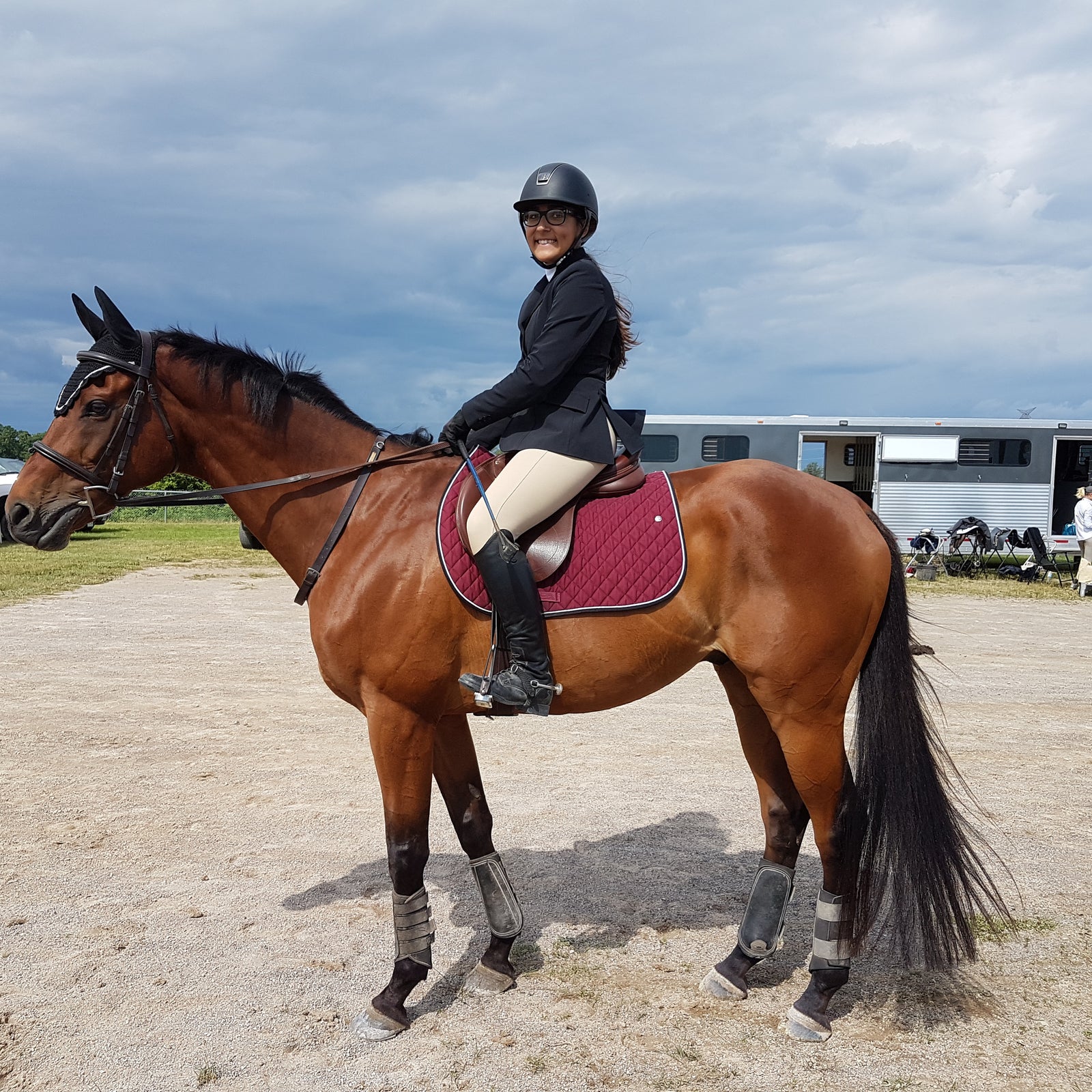
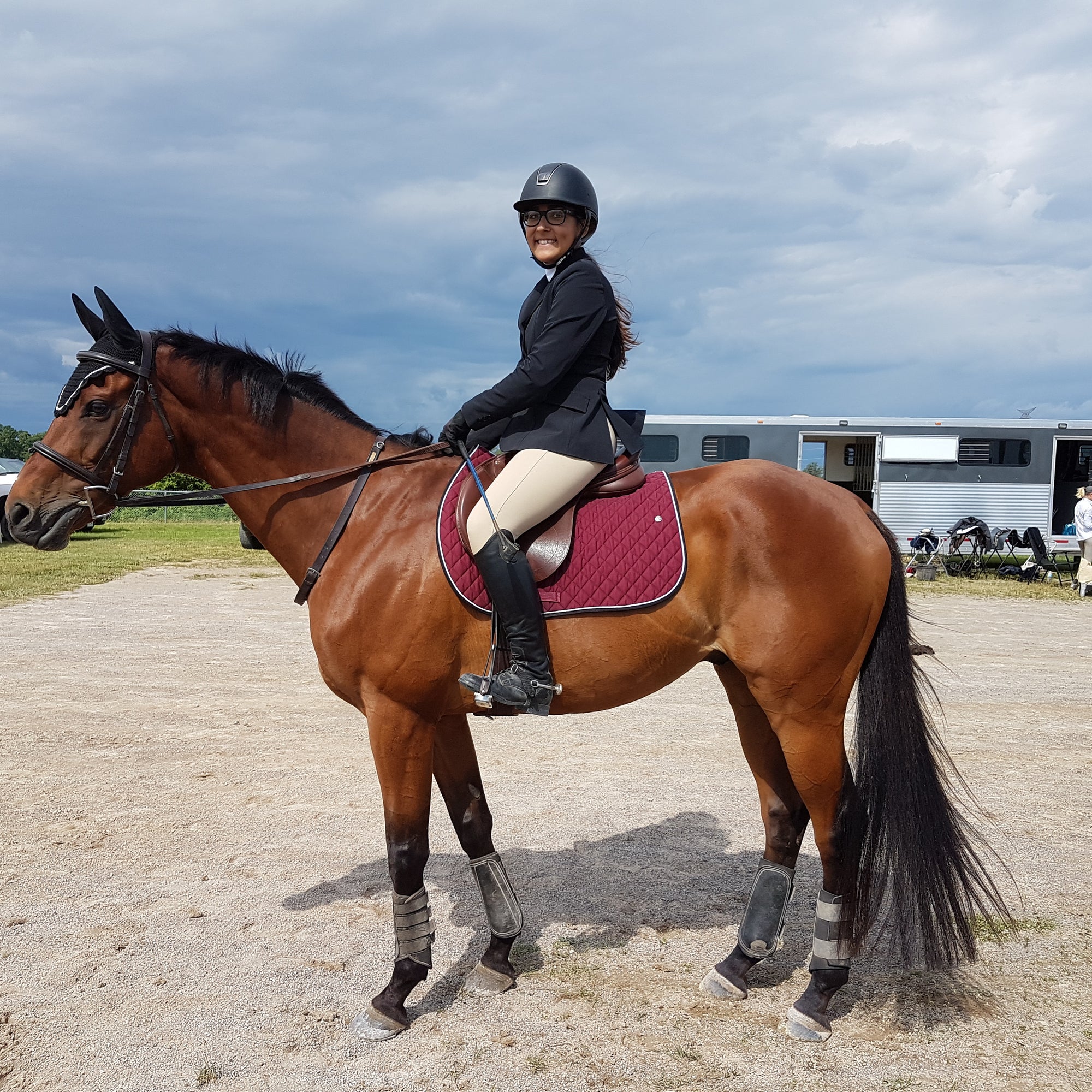
Votre cheval ne peut évidemment pas vous dire que la sangle lui fait mal. Mais il vous le montre — en couchant les oreilles quand vous le sanglez, en ayant une foulée courte après que vous soyez monté, en "gonflant" quand la sangle est mise, en étant incapable de prendre le bon galop, et par des problèmes de comportement. L'ajustement de la sangle est l'une des pièces du puzzle les plus négligées, et bien la régler peut tout changer dans la façon dont votre cheval se déplace et se sent sous la selle.
Voici comment mesurer pour un ajustement correct, à quoi cet ajustement devrait réellement ressembler et se sentir, et pourquoi tant de cavaliers passent à la sangle Tapestry Comfort une fois qu'ils comprennent ce qui manquait.
Comment mesurer votre sangle
1. Commencez avec une selle bien ajustée. L'ajustement de la sangle commence par l'ajustement de la selle — si votre selle n'est pas correctement positionnée, aucune sangle ne compensera. Sanglez comme vous le feriez normalement avant de mesurer.
2. Mesurez de l'extrémité de la boucle de sangle à l'extrémité de la boucle de sangle. Si votre sangle actuelle est bien ajustée (plus d'informations ci-dessous), mesurez votre sangle avec un mètre ruban. Vous ne voulez pas commander la taille estampillée car toutes les sangles s'étirent.
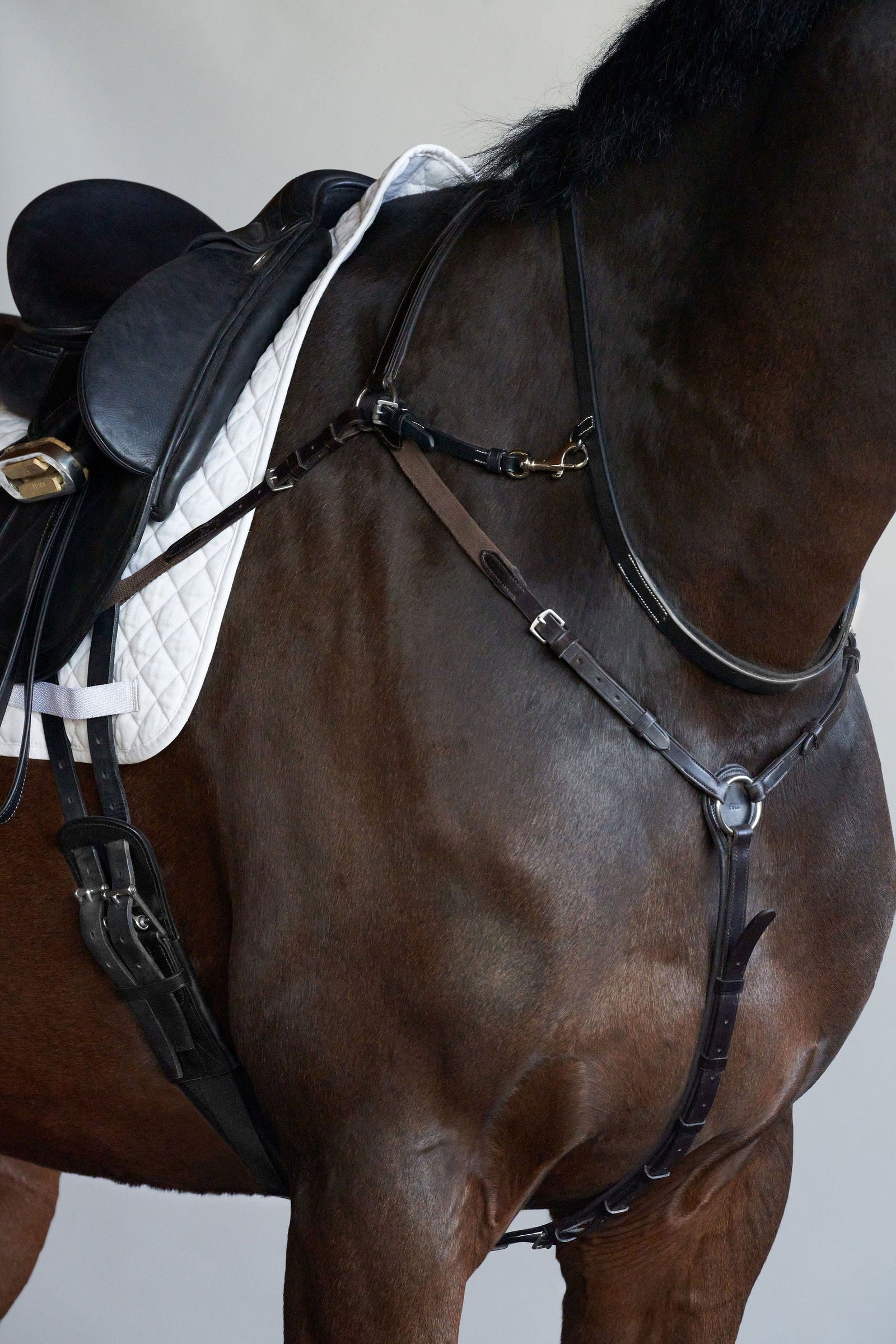
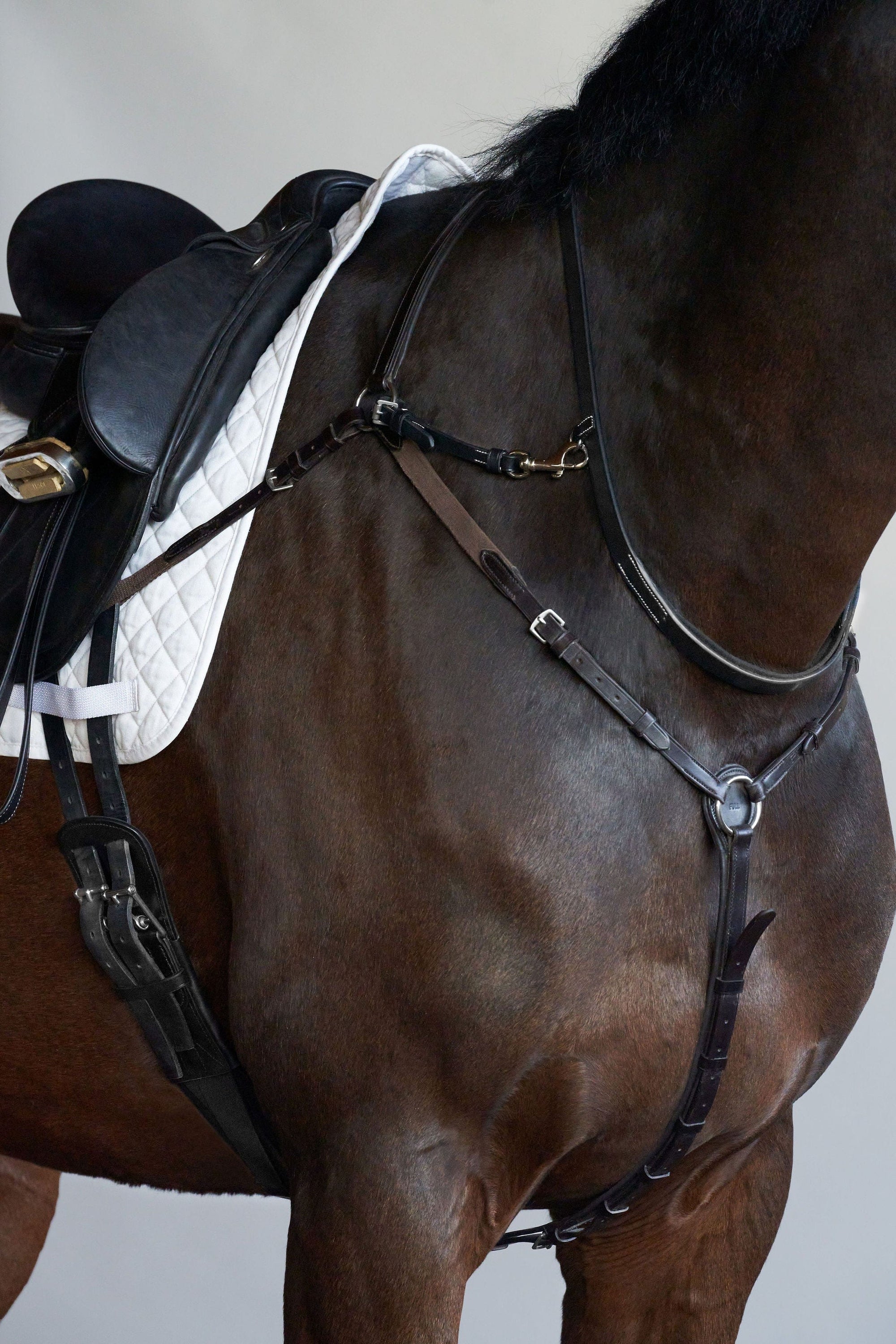
3. Vérifiez la pointe du coude. C'est la partie que la plupart des cavaliers sautent, et c'est la plus importante. Observez où la sangle se situe par rapport au coude de votre cheval lorsqu'il bouge. Le coude d'un cheval tourne vers l'arrière à chaque foulée, et si la sangle gêne ce point, vous verrez des frottements, des réactions d'inconfort à la sangle, ou une foulée raccourcie — même avec une sangle qui est techniquement "de la bonne taille". Dans une sangle de dressage/monoflap ou un surfaix, les boucles doivent se situer au moins 3 à 4 pouces (environ 7,5 à 10 cm) au-dessus de l'os du coude. Une sangle ou un surfaix plus long aide également à stabiliser la selle.
4. Confirmez avec la règle des deux doigts. Une fois la sangle bien bouclée, vous devriez pouvoir glisser deux doigts à plat entre la sangle et le flanc de votre cheval, tout autour. Serrée, mais pas trop. Si vous ne pouvez pas insérer deux doigts, prenez une taille au-dessus ou vérifiez vos contre-sanglons.
5. Revérifiez après quelques minutes de mouvement. Les chevaux ont souvent besoin d'un second contrôle de la sangle une fois qu'ils se sont échauffés et que leur ventre s'est stabilisé. Une sangle qui semblait correcte à l'arrêt peut sembler très différente au trot.
Ce qui se trouve réellement sous la sangle
Il est utile de comprendre ce que la sangle recouvre, car ce n'est pas seulement de la peau et des muscles — c'est une zone anatomique étonnamment complexe.
Juste sous le chemin de la sangle se trouve le cutaneus trunci, la fine couche de muscle cutané responsable de ce réflexe de frisson et de contraction que l'on observe lorsqu'une mouche se pose sur le flanc de votre cheval. Il est conçu pour réagir à la pression et à l'irritation. Les vétérinaires qui étudient l'inconfort lié à la sangle pointent directement ce muscle : les chevaux qui couchent les oreilles, mordent ou se raidissent contre la sangle peuvent réagir à la douleur ou à l'irritation due à la compression de ce muscle et des structures sous-jacentes, et non pas simplement être difficiles.
Le long de la ligne de la sangle se trouve la veine thoracique externe, souvent appelée la "veine des éperons" par les cavaliers — un gros vaisseau visible juste sous la peau que la plupart des cavaliers apprennent à reconnaître à vue. À proximité, la veine et l'artère thoraciques latérales irriguent la même région. Aucune de ces structures ne se trouve en profondeur ; elles sont suffisamment proches de la surface pour qu'une sangle trop en avant ou qui pince sous un mauvais angle puisse réellement les comprimer.
Ensuite, il y a la sensation elle-même : les branches cutanées latérales des nerfs intercostaux — les nerfs qui passent entre chaque côte — remontent à travers la paroi thoracique juste dans la zone de la sangle et se ramifient pour apporter la sensation à la peau exactement là où la sangle se situe. C'est pourquoi un cheval peut ressentir une sangle mal placée avec une précision réelle, et non pas seulement un inconfort général.
Et au niveau du coude spécifiquement, là où une sangle droite et rigide cause le plus de dégâts, le nerf ulnaire et ses vaisseaux collatéraux passent près de la surface. C'est la même région qui donne aux chevaux (et aux humains) cette sensibilité aiguë du "petit os qui fait rire" — c'est précisément pourquoi encombrer cet endroit avec un matériau rigide produit une réaction si disproportionnée : oreilles couchées, morsures, coups de pied, ou une foulée qui se raccourcit dès que vous vous asseyez. Ce n'est pas du cinéma. C'est de l'anatomie.
Sources :
- Topographical Anatomy of the Equine M. Cutaneus Trunci in Relation to the Position of the Saddle and Girth
- Anatomy, Thorax, Intercostal Nerves - StatPearls
- Equine Thoracic Limb Anatomy: Vessels, Lymph Nodes, and Nerve Innervation
- Limb Vasculature - Horse Anatomy - WikiVet
À quoi ressemble réellement un bon ajustement
Une sangle bien ajustée doit être invisible — dans le meilleur sens du terme. Votre cheval devrait se laisser seller sans coucher les oreilles, mordre ou retenir son souffle. Sous la selle, un ajustement correct signifie :
- Aucun frottement ni perte de poils derrière le coude, même après un travail régulier
- Une foulée libre et sans contrainte dès les premiers pas après être monté
- Pas de gonflement ou de retenue de souffle lorsque la sangle est serrée
- Des départs au galop cohérents et corrects sans résistance inexpliquée
- Un cheval qui se tient tranquillement pour le sellage au lieu de danser aux attaches
Si l'un de ces signes apparaît — même occasionnellement — il vaut la peine de regarder la sangle avant toute autre chose. Tant de cavaliers courent après l'ajustement de la selle, les problèmes dentaires ou les problèmes de boiterie sans jamais exclure la seule pièce d'équipement qui se trouve directement sur la partie la plus sensible et la plus mobile du corps du cheval.
Pourquoi la sangle Tapestry Comfort est différente
La plupart des sangles sont conçues comme une bande droite : le même matériau, la même rigidité, tout autour du ventre. Le problème est que le corps du cheval n'est ni droit ni rigide à cet endroit — le cheval est en mouvement constant et respire.
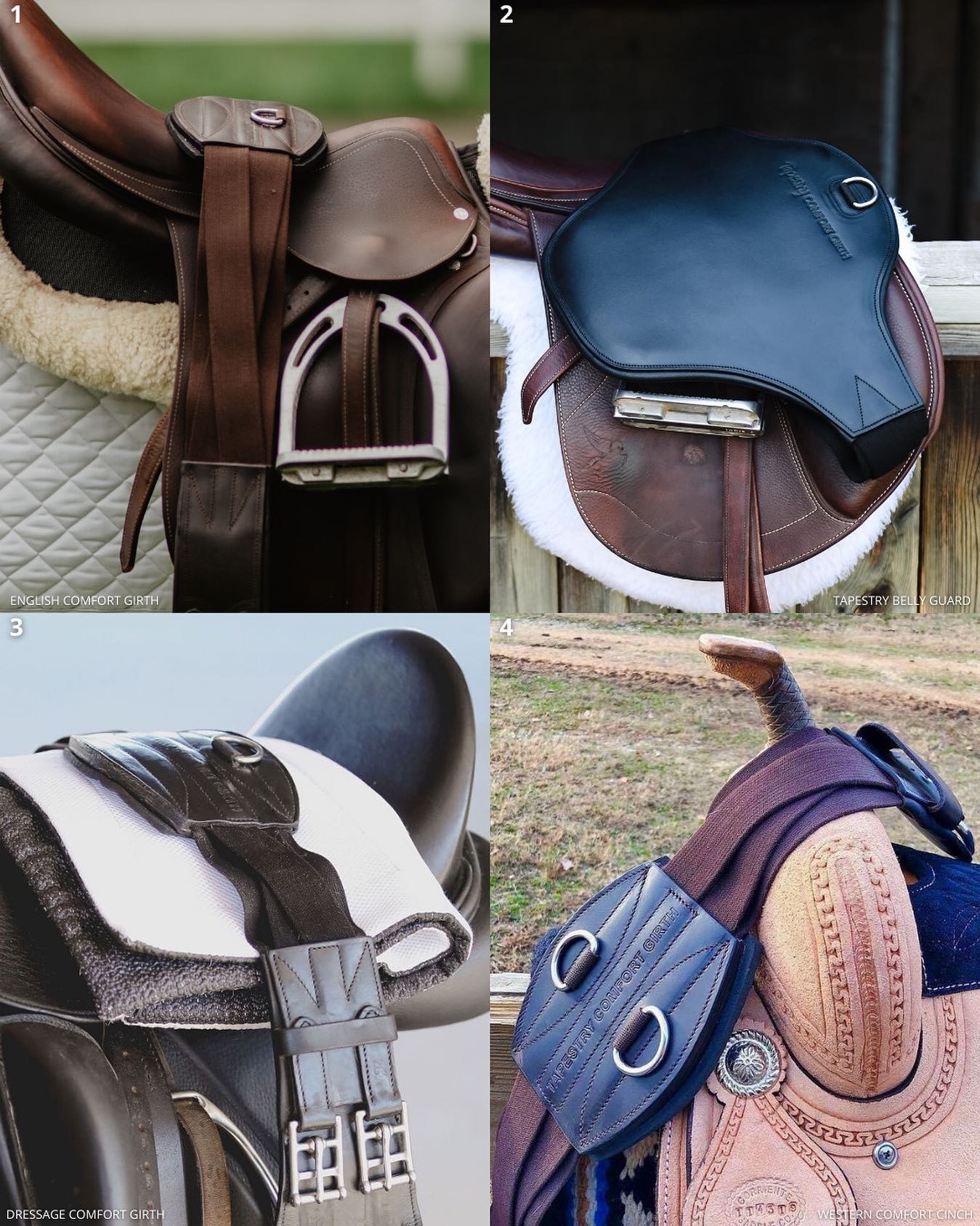
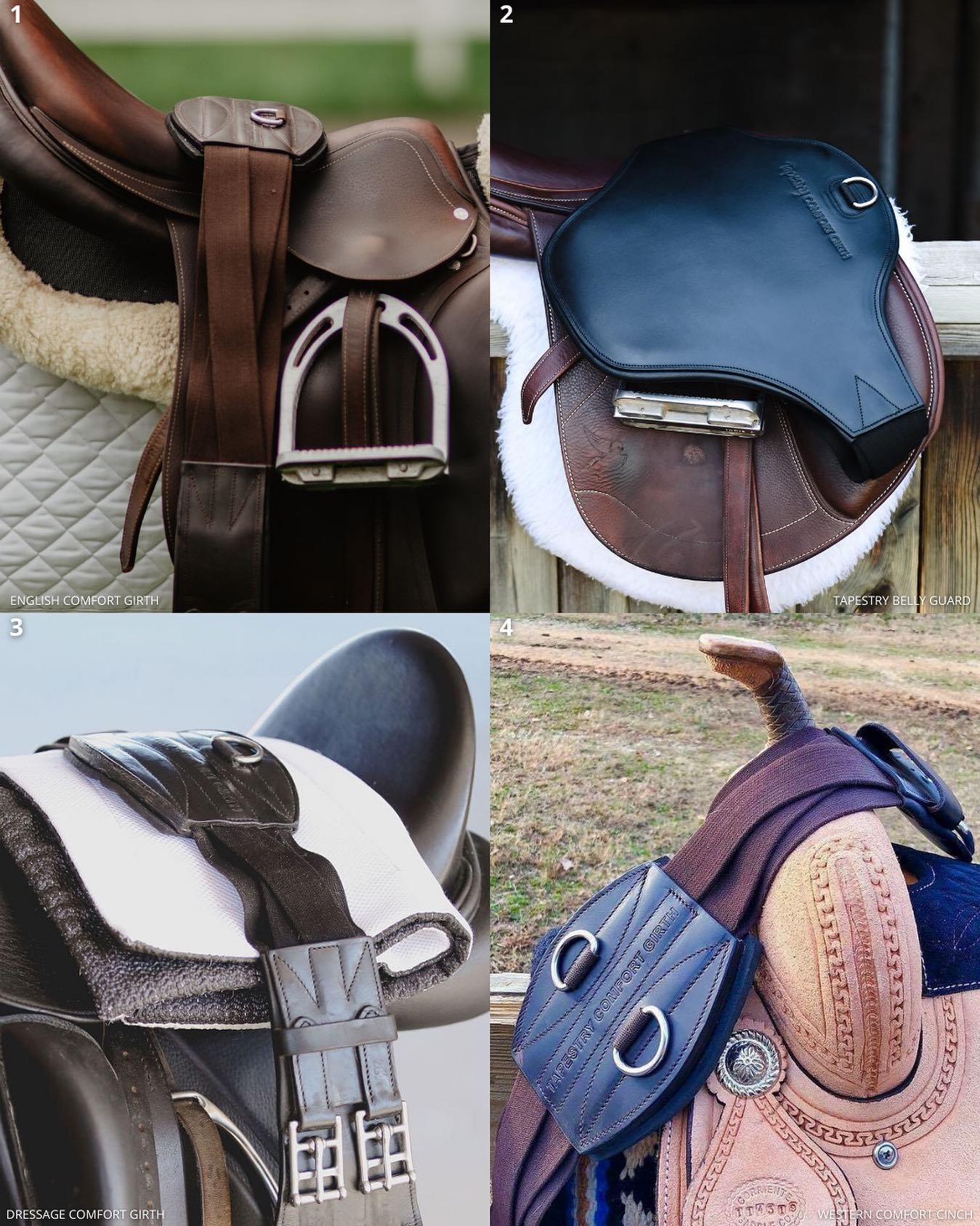
La sangle Tapestry Comfort a été la première sur le marché à intégrer de l'élastique sur l'abdomen du cheval — précisément là où le cheval a besoin de liberté de mouvement. Ce simple changement de conception fait la différence entre une sangle qui contraint et une sangle qui bouge avec le cheval.
Les cavaliers qui passent à la sangle Tapestry Comfort rapportent systématiquement les mêmes choses : des chevaux qui se tiennent tranquillement pour le sellage au lieu de coucher les oreilles ou de mordre la sangle, des foulées plus longues et plus libres dès le départ, une respiration plus profonde, et des distances de saut qui semblaient auparavant difficiles deviennent soudainement faciles. Il ne s'agit pas d'un gadget — il s'agit de construire la sangle autour de l'anatomie réelle du cheval plutôt qu'autour d'une habitude.
Confort et performance n'ont jamais été opposés. Avec la bonne sangle, votre cheval n'a pas à choisir — et vous non plus.
Cheval heureux. Cavalier heureux.